Norweco Singulair Green in Residential Wastewater Management
@waylongzka338
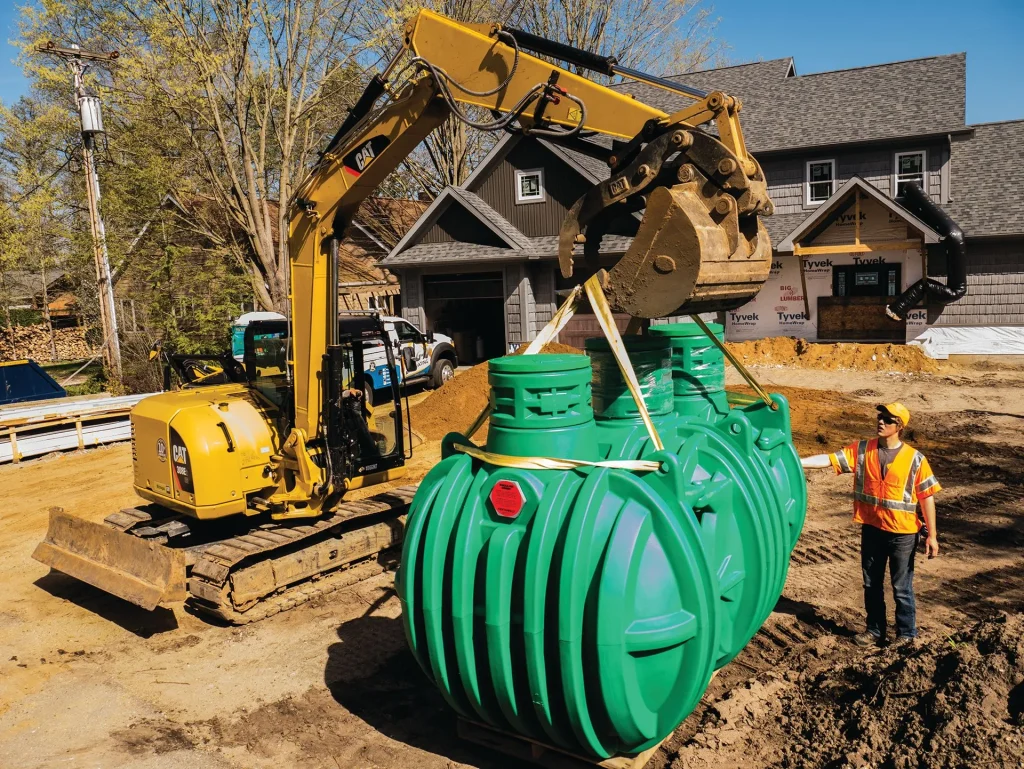

Residential wastewater treatment sits in an odd place in homeownership. Most people barely think about it until something smells wrong, a drain backs up, or a county inspector starts asking questions. Yet for homes beyond the reach of municipal sewer lines, onsite treatment is not a side issue. It is a core utility, as essential as the well, the electrical service, or the roof over the living room.
That is where systems like the norweco singulair green come into the conversation. In practical terms, this type of unit belongs to the category of advanced residential wastewater treatment systems designed to treat household sewage more thoroughly than a basic septic tank alone. For many properties, especially smaller lots, environmentally sensitive sites, or homes facing tighter discharge standards, that difference matters a great deal.
I have seen the conversation around onsite wastewater shift over the years. It used to center almost entirely on whether a standard septic system could physically fit on the lot. Now the questions are more nuanced. How reliable is the treatment? How often will service be needed? What happens during seasonal occupancy? Can the system handle modern water use habits without slipping in performance? A product like the Singulair Green is relevant because it addresses those questions more directly than a conventional gravity septic setup.
Why advanced residential treatment systems keep gaining ground
A conventional septic system can work very well when the site is right. Deep, permeable soils, good separation from groundwater, room for a properly sized drainfield, and a household with stable water use patterns all help. But many residential sites do not offer that clean set of conditions.
I have worked with homeowners on wooded lake lots, narrow rural parcels, clay-heavy soils, and renovation projects where the house footprint had grown but the wastewater options had not. In those cases, the old approach of tank plus drainfield can become difficult, expensive, or in some jurisdictions, simply unacceptable. Regulators want better treatment before effluent reaches the soil, especially where groundwater, shorelines, wells, or neighboring properties are close.
That is the practical backdrop for systems such as the norweco singulair green. It is not about gadgetry for its own sake. It is about increasing treatment quality in places where the margin for error is smaller.
What the Singulair Green is really designed to do
At its core, the Singulair Green is intended to take residential sewage through a more active treatment process than a passive septic tank. While septic tanks primarily separate solids, store sludge, and send partially clarified effluent onward, an aerobic treatment system introduces more deliberate biological treatment. The goal is cleaner effluent, reduced organic loading, and improved downstream performance.
That distinction matters. In a traditional septic tank, treatment happens largely through settling and anaerobic activity. It is a robust, time-tested process, but it has limits. Effluent leaving a conventional tank still carries a substantial treatment burden that must be handled in the soil absorption area. If site conditions are weak, that burden can become a problem.
An advanced treatment unit changes the equation by doing more work before the water reaches final dispersal. For some homeowners, this can mean the difference between obtaining a permit and being denied. For others, it can mean a better environmental outcome on a site where the old setup technically worked, but not comfortably.
What often gets lost in brochure language is that better treatment is only meaningful if the equipment is maintained and operated correctly. No residential wastewater system is magical. The best systems succeed because their design, installation, and service model support stable performance over time.
How it fits into the broader wastewater train
Homeowners sometimes picture these systems as single boxes that simply fix wastewater. The reality is more layered. A residential treatment system is usually part of a chain that may include pretreatment, aeration or biological treatment, clarification, disinfection in some jurisdictions, and final dispersal. The Singulair Green fits into that chain as a treatment component, not as an excuse to ignore everything else.
That distinction becomes important during planning. If the home has a garbage disposal and heavy organic loading, if there is frequent laundry use, or if intermittent occupancy creates feast-and-famine flows, the design has to account for those realities. I have seen excellent units underperform because somebody treated the installation like a plug-and-play appliance rather than a wastewater system that needs to be matched to the house and the site.
A well-designed residential setup asks a few straightforward questions. How many bedrooms is the home approved for? What daily flow assumptions does the local authority require? How will the treated effluent be discharged or dispersed? What service access will be available in winter? If alarms occur, who responds? These are not glamorous questions, but they are the ones that determine whether the system becomes a quiet asset or an expensive irritation.
Where the norweco singulair green often makes sense
In the field, I tend to see interest in systems like this under a few recurring conditions:
- properties with limited usable area for a conventional drainfield
- sites near lakes, streams, wetlands, or shallow groundwater
- replacement projects where an aging septic system no longer meets code
- new homes in jurisdictions requiring higher treatment standards
- households that need a compact treatment solution with documented performance expectations
Those are broad categories, not automatic qualifiers. A very simple rural site with ideal soils may not need advanced treatment at all. On the other hand, a small waterfront lot with restrictive soils may benefit from it immediately.
The strongest candidates are usually properties where the soil alone should not be asked to carry the entire treatment load. That is often the hidden value of systems like the Singulair Green. They reduce dependence on the absorption field as the primary treatment engine and instead treat the water more aggressively up front.
The real advantages, beyond marketing language
Homeowners often ask whether advanced systems are worth the extra expense. The honest answer is that it depends on what problem is being solved. If the alternative is a straightforward conventional septic system on a forgiving lot, the cost-benefit argument may be harder to justify. If the alternative is a failed permit, a highly engineered mound, or ongoing environmental risk, then the calculation changes quickly.
One practical advantage is treatment consistency. A well-maintained aerobic residential unit can deliver more predictable effluent quality than a basic tank alone. That can support compliance with stricter local requirements and, in the right design context, reduce stress on downstream dispersal components.
Another advantage is flexibility. On constrained lots, advanced treatment can open design paths that would otherwise be unavailable. I have seen projects where a homeowner wanted to rebuild a small inherited cabin into a modest year-round house. The site had mature trees, property line setbacks, and a nearby well to contend with. Without a higher level of treatment, the wastewater layout would have forced such severe compromises that the project might have died on paper. Advanced treatment kept it viable.
There is also a stewardship argument. For homeowners near sensitive waters, the idea of discharging cleaner effluent is not abstract. It is part of protecting the shoreline, the well water, and the long-term usability of the property. That matters more now than it did a generation ago, partly because development density has increased on many rural and recreational corridors.
The trade-offs that deserve an honest look
No professional should describe an advanced treatment system without also discussing its demands. This is not a buried concrete box you forget for decades. It is equipment. Equipment needs observation, service, and owner awareness.
The first trade-off is maintenance. A basic septic system should still be inspected and pumped on schedule, but an aerobic treatment unit adds another layer of routine care. Components must remain operational. Access points must stay serviceable. Alarms should never be ignored. In most cases, a service relationship is part of responsible ownership.
The second trade-off is power dependency. If a treatment system relies on active biological processes and electrical components, power interruptions matter. Brief outages may not create a crisis, but repeated or prolonged outages can affect treatment performance. In regions with unreliable electricity, this needs to be part of the conversation early, not after the first storm.
The third is user behavior. Even a strong treatment unit can be undermined by bad habits. Wipes, grease, solvents, paint residues, excessive bleach, and hydraulic surges from poor plumbing practices all create trouble. Many homeowners assume a more advanced system can digest anything. In my experience, the opposite mindset is healthier. Better equipment deserves better habits.
The fourth is lifecycle cost. Upfront cost is only part of ownership. Service visits, pump-outs, possible component replacement, and occasional troubleshooting all belong in the real budget. That does not mean the system is poor value. It means value should be judged over fifteen to twenty years, not just at installation.
Installation quality makes or breaks performance
A well-manufactured unit can still fail in practice if installation is sloppy. That sounds obvious, but it remains one of the most common problems in onsite wastewater work. Homeowners may spend significant money on an advanced treatment package, then assume that all contractors install them equally well. They do not.
Grade matters. Elevation control matters. Watertight connections matter. Access for service matters. Control components must be protected from moisture intrusion and accidental damage. The dispersal area that follows the treatment unit must also be correctly sized and constructed, because even excellent effluent still needs proper management after treatment.
I remember a property where the owners complained that they had paid for a premium treatment system yet still dealt with nuisance alarms and wet ground. The issue was not the unit itself. The installer had created poor hydraulic relationships between the treatment tank and the downstream dispersal section, and service access had been left awkward and partially buried. Once corrected, the system settled down and performed as expected. The lesson was plain: hardware quality and installation quality are separate things.
Local permitting also shapes installation. Some counties are highly experienced with advanced treatment systems and have clear review standards. Others are less familiar, which can slow approvals or create inconsistent expectations. Homeowners should expect paperwork, inspections, and sometimes a service agreement requirement. None of this is a sign that the system is problematic. It is simply part of using a higher-accountability wastewater approach.
What homeowners should expect during normal operation
A properly functioning treatment system should be unremarkable day to day. There should not be sewage odors around the home. Alarms should not be recurring. Toilets and drains should function normally. The area over the final dispersal component should not stay soggy absent unusual weather conditions.
Still, ownership is not passive. A smart homeowner learns the basic pattern of the system and keeps records. That includes installation documents, permit approvals, service reports, and pump-out history. When ownership changes, those records become extremely valuable. Too many real estate transactions involve advanced onsite systems that nobody fully understands, which creates anxiety for buyers and can lead to poor upkeep after closing.
The most useful homeowner mindset is simple: pay attention early. If the alarm sounds, call for service. If a patch of ground becomes persistently wet, investigate. If a renovation adds bedrooms or fixtures, ask whether the wastewater capacity assumptions still hold. Wastewater problems are cheaper to solve in the early stages than after months of neglect.
Maintenance is not optional, but it does not have to be burdensome
Routine service tends to be the dividing line between homeowners who appreciate advanced systems and those who resent them. People who accept maintenance as part of ownership are rarely shocked by the experience. People who expected invisibility often feel frustrated.
For most households, the maintenance picture is manageable if expectations are clear from the start:
- schedule regular inspections through a qualified service provider
- keep lids, risers, and control panels accessible year-round
- avoid flushing wipes, grease, harsh chemicals, and non-biodegradable debris
- pump accumulated solids when recommended, not only after symptoms appear
- respond quickly to alarms or unusual odors
Those practices are not complicated. They are closer to furnace maintenance than to emergency plumbing work. The problem is not that the tasks are difficult. The problem is that homeowners often inherit systems they were never taught to manage.
Service quality also matters. An experienced provider does more than check a box. They notice changing sludge levels, signs of hydraulic overload, worn components, and subtle shifts in operation that a homeowner would miss. Good service extends equipment life and protects the downstream soil treatment area, which is often the most expensive part of the system to replace.
Comparing it with a conventional septic setup
A fair comparison between the norweco singulair green norweco singulair green and a conventional septic system has to start with the site. On the right parcel, with favorable soils and enough area, a gravity septic system remains hard to beat for simplicity. It has fewer moving parts, lower routine service expectations, and a long record of success when properly designed and pumped.
But simplicity is not the only metric. On marginal sites, a conventional system can become less simple very quickly. You may need imported sand, elevated construction, pressure distribution, or larger protected areas. At that point, the line between “simple” and “complicated” starts to blur, especially once long-term performance risk is considered.
Advanced treatment systems earn their keep where site limits, regulatory standards, or environmental concerns raise the stakes. They are not automatically better in every setting. They are better suited to certain settings.
A homeowner deciding between the two should resist brand-first thinking. The first question is not “Which product is best?” It is “What level of treatment does this site require, and what system can deliver it reliably here?” Once that question is answered, then product selection becomes meaningful.
The homeowner experience during seasonal and variable use
One point that deserves more attention is occupancy pattern. Not every home produces wastewater in a neat, steady flow. Vacation homes, multigenerational households, short-term guest surges, and work-from-home schedules all create irregular loading. Advanced treatment systems may respond differently to these patterns than conventional tanks.
Some units handle variable flow quite well when designed and serviced appropriately. Others may need closer attention during long idle periods or rapid changes in loading. Homeowners with seasonal properties should discuss that issue specifically, rather than assuming all treatment systems behave the same way. I have seen lake cottages sit lightly used for months, then host three families over a holiday weekend. Any wastewater system, however advanced, needs to be sized and managed with that pattern in mind.
Water use efficiency also intersects with performance. High-efficiency fixtures help, but they do not excuse concentrated peak loads. Running multiple back-to-back laundry cycles, draining a large soaking tub while guests shower, and emptying a softener at the wrong interval can stress a system. Balanced daily flow is almost always kinder to treatment processes than feast-and-famine surges.
Common misconceptions that lead to trouble
The first misconception is that cleaner effluent means unlimited capacity. It does not. Bedrooms, occupancy, and daily design flow still matter. A system approved for one loading condition should not be casually asked to serve a larger one.
The second is that alarms are minor annoyances. They are not. An alarm is the system asking for attention before a smaller issue becomes a larger one. Ignoring it is like covering a check-engine light with tape.
The third is that if the yard looks fine, the system must be fine. Many treatment problems develop quietly. Mechanical wear, solids carryover, or reduced treatment efficiency may not show immediate surface symptoms. That is why service intervals matter.
The fourth is that any septic contractor can diagnose any advanced treatment system. Some can, some cannot. Homeowners are better served by professionals familiar with the specific technology, local code requirements, and the entire treatment train attached to the property.
Is the norweco singulair green a good fit for every home?
No. That is not a criticism. It is simply the truth that applies to every wastewater product on the market. The best system is the one that fits the property, the regulatory framework, and the owner’s willingness to maintain it.
For a home on an ideal rural lot with deep sandy soils and generous setbacks, a conventional septic design may remain the most rational choice. For a small lot with demanding site constraints, environmental sensitivity, or local requirements for enhanced treatment, the norweco singulair green may be exactly the kind of system that makes the project workable and responsible.
The right way to evaluate it is through the lens of total site design. Look at soils, setbacks, topography, occupancy, service availability, power reliability, and the long-term ownership plan. If those factors align, an advanced treatment system can be a strong asset, not merely a compliance tool.
Residential wastewater management rarely gets praise when it works. That is the nature of hidden infrastructure. But when a system is chosen carefully, installed well, and maintained on schedule, it protects property value, public health, and the surrounding environment in ways that are easy to overlook and expensive to neglect. On the right site, that is where a system like the Singulair Green earns its place.
Excavating New Jersey LLC
406 County Rd 565, Wantage, NJ 07461, United States
+1 973-791-4284
FAQ About norweco singulair green
How much does a NORWECO septic system cost?
The installed cost depends on the selected unit, engineering, site access, excavation, electrical work, disposal-field design and required approvals. A tank-only price is not a complete installation quote. Ask Excavating New Jersey LLC for a site-specific, itemized estimate that also explains ongoing service costs.
How does a Norweco septic system work?
The Singulair Green uses pretreatment, aeration, clarification and filtration to treat domestic wastewater. In the aeration chamber, oxygen supports bacteria that break down organic material. The Bio-Kinetic unit provides further filtration and flow equalization. Final effluent disposal must follow the property's approved design and applicable requirements.
What is the average lifespan of a septic system?
There is no guaranteed lifespan for every system. Design, installation, soil conditions, wastewater loading and regular maintenance all matter, and mechanical parts may need replacement before the tank. For a Singulair Green system, follow the manufacturer's service schedule and have a qualified provider assess its condition and pumping needs.