Why System Design Matters for Norweco Singulair Green in Wantage NJ
@waylongzka338
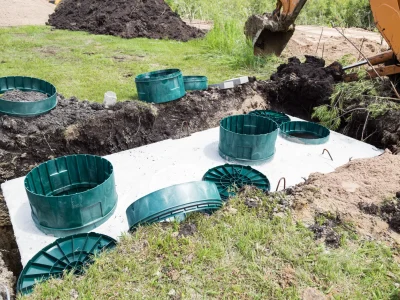
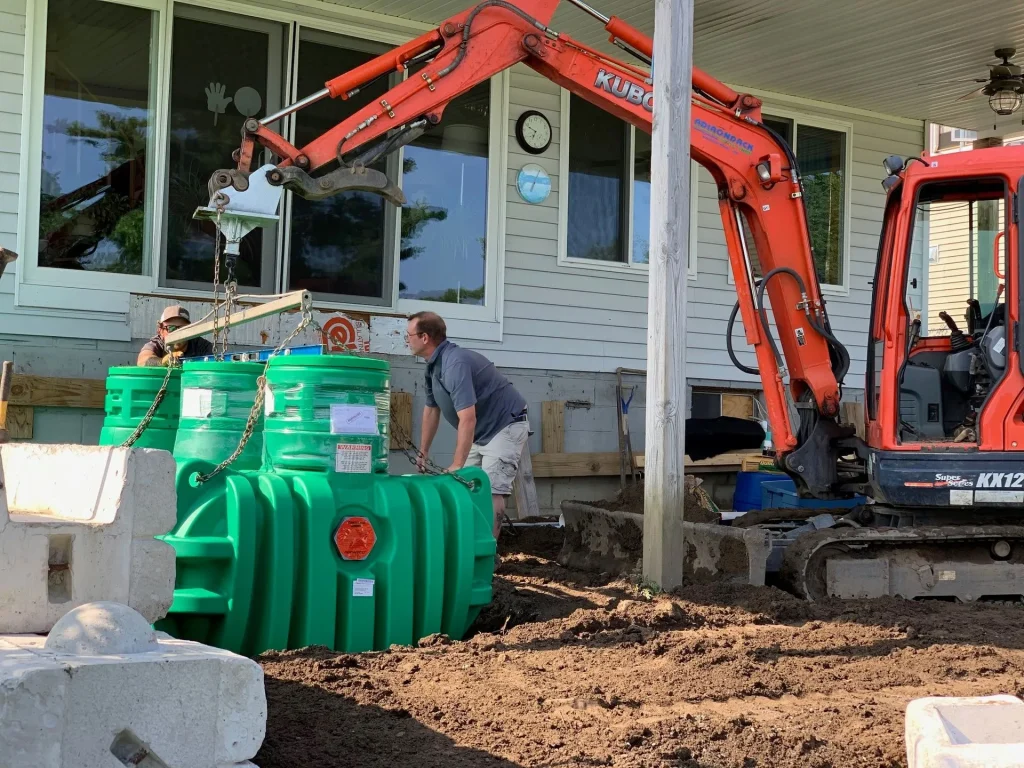

A Norweco Singulair Green unit can be an excellent fit for properties that cannot rely on a simple gravity septic layout, but the treatment unit itself is only part of the story. What determines performance over the long haul is system design. I have seen technically sound treatment equipment struggle because the site work, hydraulics, soil dispersal, or control setup did not match the property. I have also seen difficult lots perform reliably for years because the designer respected the land and built the rest of the system around the realities on site.
That distinction matters in Wantage. Properties in this part of Sussex County often come with the kind of conditions that expose weak design quickly. Sloping ground, variable soils, older homes with limited room for replacement areas, seasonal water movement, and long, cold winters all put pressure on a wastewater system. A Norweco Singulair Green installation in Wantage NJ is not just a matter of picking a treatment tank and setting it in the ground. It is a matter of shaping a complete treatment and disposal process that fits the lot, the house, and the actual water use.
The treatment unit is not the whole system
People often talk about advanced treatment units as if they are plug and play appliances. That framing causes problems. The Norweco Singulair Green is designed to produce high quality effluent through aerobic biological treatment, clarification, and disinfection processes depending on the approved configuration. That can be a major advantage where environmental sensitivity or dispersal constraints make cleaner effluent necessary.
Still, the unit does not eliminate the need for good wastewater engineering. Effluent has to reach the treatment tank at the right rate. It has to move through the process train without short cycling or surging. The discharge or disposal area has to accept water without ponding or hydraulic overload. Access for service has to be practical, not theoretical. The controls need to account for outages, alarms, and real maintenance habits.
A well designed system treats the unit as one component in a chain. A poorly designed system treats it as a magic fix. The first approach tends to last. The second tends to produce callbacks, odors, nuisance alarms, or premature failure in the disposal field.
Why Wantage puts design under a microscope
Wantage is not norweco singulair green Wantage NJ Excavating New Jersey LLC unique in having septic challenges, but it does combine several common rural constraints in one place. Larger lots can mislead people into thinking there is always plenty of room. In practice, usable septic area can shrink fast once you account for setbacks, wells, slopes, drainage patterns, driveways, outbuildings, and reserve areas. Add a house addition, a pool, or a detached garage and layout options get tighter.
The land itself can vary a lot from one parcel to the next. On one project you may have decent native soil at workable depth. Next door you may hit shallow limiting zones, seasonal saturation, or rock that changes the dispersal strategy entirely. Northwestern New Jersey also sees freeze thaw cycles that punish shallow piping and any system component installed without attention to grade, cover, and drainage. Heavy rains do not help. A system can be perfectly adequate on paper and still struggle if stormwater is allowed to concentrate above the disposal area.
That is why system design matters so much for a Norweco Singulair Green in Wantage NJ. Advanced treatment improves effluent quality, but it does not repeal site constraints. If anything, it raises the stakes because owners often invest more up front and expect a higher level of reliability.
Cleaner effluent helps, but hydraulics still rule
One of the most common misunderstandings in onsite wastewater is the belief that cleaner effluent automatically solves loading issues. It does not. Soil absorption systems fail as much from poor hydraulics as from poor treatment. If too much water arrives too quickly, even well treated effluent can overwhelm the receiving area. If effluent is distributed unevenly, one portion of the field takes the punishment while the rest does little work.
This is where design decisions start to separate good projects from mediocre ones. Tank sizing, pump chamber volume, timed dosing, dose frequency, lateral layout, pressure distribution, and elevation control all affect how the dispersal area behaves. A well designed system spreads dosing across the day and across the field. That gives the soil time to accept, treat, and transmit water. It also reduces the risk of localized saturation.
I remember a site where the owner was convinced the treatment unit was defective because the field stayed wet after busy weekends. The real issue was not the treatment train. It was the delivery pattern. The pump settings were sending larger, less frequent bursts than the disposal area could comfortably absorb under wet seasonal conditions. After the controls were adjusted and distribution was verified, the problem subsided. Same treatment unit, different hydraulic behavior.
That kind of issue is not unusual. It is also norweco singulair green Wantage NJ preventable.
The dispersal area deserves as much attention as the tank
A Norweco Singulair Green system often enters the conversation because the site needs help. Maybe the soils are marginal. Maybe the lot has limited area. Maybe local requirements call for higher treatment before dispersal. In any of those cases, the disposal strategy cannot be an afterthought.
The receiving area may be a subsurface field, a pressure dosed bed, a drip configuration where permitted, or another approved dispersal method based on local regulation and site conditions. The exact option depends on the property, but the design principles stay consistent. The receiving zone must match the soil's acceptance rate, maintain required separations, distribute water evenly, and remain serviceable over time.
On constrained lots, I have seen projects where every inch seemed spoken for. The temptation in that situation is to focus narrowly on making the unit fit. That is backward. The dispersal area is where long term success is won or lost. If the lot forces a compact footprint, the design has to account for that honestly. Sometimes that means a more sophisticated pressure network. Sometimes it means revisiting the location of other site features. Sometimes it means acknowledging that the desired house expansion and the desired septic layout cannot both happen exactly as planned.
That may sound inconvenient, but it is much cheaper than replacing a stressed field a few years later.
Elevation, slope, and pump strategy are not minor details
Many Wantage properties are not flat, and elevation changes reshape the entire wastewater layout. A small difference in grade can determine whether flow reaches the treatment unit by gravity, whether a lift station is needed, and how many pumping events the system will see in a normal day. Every added pump is a piece of equipment that needs power, alarms, and maintenance. That does not make pumps bad. It means they need to be used deliberately.
A smart design minimizes unnecessary complexity while respecting topography. If the house sewer exits low and the best disposal area sits uphill, then pumping may be unavoidable. In that case, the designer should think beyond simply getting water from point A to point B. What is the reserve storage during a power outage? Where will alarms be noticed quickly? Can the service team reach the components in winter? Is the force main routed to avoid freeze risk and future damage from vehicles or landscaping?
These are not abstract questions. On rural properties, utility outages can last longer than people expect. Snow piles end up where no one planned. Homeowners pave or plant over components they barely remember are there. Good design anticipates human behavior as much as soil behavior.
Water use patterns inside the home shape performance outside
Not every septic issue begins in the yard. I have walked properties where the outdoor components were perfectly reasonable, but the house was sending them a punishing flow pattern. Large soaking tubs, body spray showers, high occupancy during holidays, water softener backwash, old toilets, basement laundry additions, and leaking fixtures can create a hydraulic profile far different from the one assumed during planning.
That is another reason system design matters. The best designers ask how the house is actually used. A three bedroom house occupied by two adults does not stress a system the same way a three bedroom short term rental does. A property with frequent guests or multigenerational occupancy may need more operational cushion than bedroom count alone suggests. The point is not to overbuild carelessly. The point is to design with realistic use in mind.
For a Norweco Singulair Green installation, matching treatment and dosing to anticipated usage helps preserve stable biology and smoother field loading. Aerobic systems generally perform best when they receive wastewater in patterns they can process consistently. Extreme surges are hard on everything, from pump cycles to clarifier behavior to downstream dispersal.
Cold weather changes the margin for error
Winter in northern New Jersey exposes shortcuts. Tanks and lines do not freeze simply because temperatures drop. They freeze when design leaves them vulnerable. Shallow pipes with poor cover, low flows through oversized lines, exposed risers, bad grading that channels cold air, and interrupted use patterns all raise the risk.
A property that sits empty for stretches can be more vulnerable than a fully occupied home because warm wastewater is not moving regularly through the system. Vacation use, weekend occupancy, or a home on the market can all change operating conditions. In those cases, design should account for insulation, burial depth, component placement, and service access without assuming ideal occupancy.
Cold weather also affects maintenance. A system that is easy to inspect in July can be miserable to service under frozen ground and snow cover if risers are not brought to grade or access is blocked. That may sound secondary until an alarm goes off on a January night. Then access is everything.
Good design includes maintenance from day one
Advanced treatment systems require ongoing service. That is not a flaw. It is part of the package. The problem comes when a system is designed as if no one will ever need to open, test, clean, or adjust anything. I have seen units installed in locations where lids were hard to reach, alarm panels were tucked into awkward spots, and sample points were effectively unusable. Those choices save little during installation and create headaches for years.
A maintainable design usually shares a few traits:
- Access risers are at practical grade and easy to locate.
- Control panels and alarms are visible and readable.
- Pump tanks and filters can be serviced without heroic digging.
- The disposal area is protected from traffic and future encroachment.
- The owner receives a layout record clear enough to use later.
None of that is glamorous, but it is the difference between regular maintenance and deferred maintenance. Systems that are easy to service tend to get serviced. Systems that are frustrating to service tend to be neglected until something forces attention.
Stormwater and septic water should never mingle
One of the fastest ways to undermine an otherwise solid system is to let roof runoff, driveway drainage, footing drains, or upslope seepage interfere with it. This problem shows up repeatedly on sloped or improved sites. A new gutter discharge, a regraded yard, or a shed pad installed years after the septic work can alter how water moves across the property.
For advanced treatment systems, stormwater intrusion creates two separate problems. First, excess clear water adds hydraulic load where it does not belong. Second, wet soils around tanks and fields reduce the site’s capacity to accept treated effluent. Even a well performing Norweco Singulair Green system cannot compensate for chronic stormwater mismanagement.
This is one of those design topics that rarely gets enough respect because it sits at the boundary between wastewater planning and site drainage planning. On difficult lots, the two should be considered together. Swales, downspout routing, grading, and driveway runoff control may be just as important to long term septic performance as the treatment unit selection itself.
Permitting standards are minimums, not a design philosophy
Regulatory requirements matter, and every project has to comply with the applicable rules, permits, and approvals. But a minimum code compliant design is not always a resilient design. There is a difference between passing review and building a system that has margin.
That margin can take many forms. It might be more thoughtful dosing control. It might be a cleaner service layout. It might be extra attention to reserve capacity, field protection, or future access. Especially on properties with known constraints, the best designs aim for reliability rather than mere sufficiency.
Owners sometimes ask why one proposal costs more than another when both mention the same treatment unit. Often the answer lies in the parts people do not immediately see. Better control logic, more careful distribution, more realistic excavation planning, and stronger site integration all cost something. They can also spare the owner from chronic nuisance issues and repeated service calls.
Retrofitting older properties takes judgment
A lot of interest in advanced treatment comes from existing homes where the original septic layout no longer fits current needs or current standards. Retrofitting these sites is rarely straightforward. Existing driveways, wells, retaining walls, additions, mature trees, and utility conflicts can force compromises. The trick is knowing which compromises are manageable and which ones create future risk.
This is where local experience has real value. A designer familiar with rural New Jersey conditions will usually look beyond the plan set and think about how the property behaves during spring wet periods, after storms, and during freeze thaw swings. They will also pay attention to how owners actually move around the site. Where do cars park? Where will snow be pushed? Is there any realistic chance that someone installs a patio over a key line later?
Retrofitting a Norweco Singulair Green system in Wantage NJ can be a smart path for an older home, but only if the design is honest about the constraints. Sometimes that means a creative layout. Sometimes it means a frank conversation about budget and expectations.
What homeowners should ask before approving a design
Most owners are not expected to know wastewater engineering, but they can still ask useful questions. The answers reveal whether the design has been thought through or merely assembled.
A few questions are especially revealing. How will wastewater be dosed to the disposal area, and why that method? What site conditions drove the layout? Where are the main service points, and can they be reached year round? How is stormwater being kept away from the treatment and dispersal areas? What assumptions were made about occupancy and daily water use? If power is lost, how much reserve capacity exists before urgent action is needed?
When those answers are clear and practical, it usually means the design has depth. When the answers are vague or overly confident, that is worth pausing on.
Long term performance comes from fit, not branding
Norweco has a recognized name in advanced onsite treatment, and the Singulair Green line is often considered for sites that need better effluent quality than a basic septic tank can offer. That reputation matters, but it should not distract from the central truth. The right brand on the wrong design still produces poor results. The right unit on the right design can solve difficult site problems gracefully.
I have seen homeowners focus intensely on the treatment device and spend almost no time asking how the rest of the wastewater path will work. That is understandable. The treatment unit is tangible. It has a name, components, and clear marketing. Soil loading patterns, dose volumes, and site drainage are less visible. Yet those invisible factors often decide whether the owner remembers the system as dependable or troublesome.
For properties in Wantage, where terrain, weather, and lot constraints often demand more than a basic template, system design is not a side issue. It is the issue. If you are evaluating a norweco singulair green Wantage NJ project, the best investment you can make is not just in the equipment. It is in a design that respects the site, anticipates real use, and makes maintenance practical for the life of the system.
That kind of planning may not be the most dramatic part of the job, but it is the part that protects performance year after year.
Excavating New Jersey LLC
406 County Rd 565
Wantage, NJ 07461, United States
Phone: +1 (973) 791-4284
FAQ About norweco singulair green Wantage NJ
How does a Norweco septic system work?
Singulair Green uses aerobic biological treatment in a polyethylene tank, followed by settling and filtration. The treatment unit is one part of a complete wastewater system; the site design also determines how treated effluent is dispersed.
How much does a Norweco septic system cost in NJ?
A useful estimate requires a property evaluation. Excavation access, soil conditions, engineering, electrical work, the disposal field, and restoration can affect the total. Ask Excavating New Jersey LLC for a written scope that distinguishes installation costs from ongoing service costs.
Are Norweco septic systems good?
Singulair Green is an established aerobic treatment option, but suitability depends on the property and proposed design. Compare the model's documented performance, maintenance needs, and total project scope with alternatives before deciding.